Departments of Statistics and Mathematics of METU and Institute of Applied Mathematics are coordinating their general seminars. Most of the weeks of the semester, Thursday afternoons, there will be a general seminar organized by one of these departments. The seminar time depends on the organizing department:
Statistics: Thursday, 14:00
IAM: Thursday, 14:30
Mathematics: Thursday, 15:40
Institute of Applied Mathematics (IAM) is an interdisciplinary centre fostering various researches and teaching activities in mathematical sciences. In order to coordinate mathematics-based research as well as to undertake collaborative research with industry, IAM has established Colloquia (General Seminars), since its foundation in 2002, almost every Tuesdays in the afternoon. A colloquium at the institute usually lasts about 45 minutes.
The Colloquium provides an opportunity to build and strengthen relations between researches, practitioners, regulators from various fields and members, especially the students, of IAM. Here, at IAM with four specialised departments (Actuarial Sciences, Cryptography, Financial Mathematics, Scientific Computing) we are expecting valuable contribution and exchange of ideas from different scholars, lecturers and specialists.
General audience of the Colloquia at IAM consists of both graduate and undergraduate students, scholars and academics from various research fields, including the departments at IAM. As the audience is not homogeneous, invited speakers are advised to consider the following general principles of a colloquium talk at IAM:
-
Colloquium talks are given to general audience; however, such a colloquium talk at IAM might sometimes resemble a research seminar (only when it is necessary).
-
A (colloquium) talk is not a paper, it needs a special preparation (pre-prep and pre-planning) in order to involve and attract as many attendees as possible to the subject. This is crucial if the audience is not homogeneous (with backgrounds from different research areas).
-
Mathematics is an expressive and precise language we communicate; however, reading mathematics (on board or on slides) distracts and disengage the audience from the speaker! Similarly, long tables, long algorithms, crowded charts or diagrams might be difficult to read and comprehend by the audience. So, special care is needed when necessary.
-
Facilities might improve the style of the talk. At IAM, besides the (white) board and transparencies, a projector connected to a computer is available for the electronic versions of the presentations.
|
Affiliation: Mathematics Group, METU NCC Speaker: Dr. Georgy Kitavtsev Date/Time: 26.03.2026 - 14.30 Place: Hayri Körezlioğlu Seminar Hall, IAM/METU Abstract: Information to be updated. |
 |
|
Affiliation: Atilim University, Department of Mathematics Speaker: Doç. Dr. Fatih Sulak Invited by: Assoc.Prof.Dr. Oguz Yayla Date/Time: 15.05.2025 - 14.30 Place: Hayri Körezlioğlu Seminar Hall, IAM/METU Abstract: In this talk, we evaluate the effectiveness and limitations of the SP 800-90 entropy estimation methods by exploring the accuracy of these estimators using simulated random numbers with known entropy, investigating the correlation between entropy estimates, and studying the impacts of deterministic transformations on the estimators. |
 |
|
Affiliation: Department of Electrical and Electronics Engineering, METU Speaker: Assistant Professor Ahmed Hareedy Invited by: Assoc.Prof.Dr. Oguz Yayla Date/Time: 24.04.2025 - 14.30 Place: Hayri Körezlioğlu Seminar Hall, IAM/METU Abstract: The density of data storage devices has increased by a factor of 10,000 over the past 20 years. In this seminar, I will present effective coding techniques that take full advantage of new characteristics to increase the reliability of modern data storage and computing. I will introduce efficient reconfigurable constrained codes and high performance low-density parity-check (LDPC) codes. I will focus on modern Flash memory devices and discuss how machine learning and coding can help each other. |
 |
|
Affiliation: Hacettepe University, Department of Mathematics Speaker: İsmail Aslan Date/Time: 17.04.2025 - 14.30 Place: Hayri Körezlioğlu Seminar Hall, IAM/METU Abstract: We will discuss artificial neural network operators that utilize sigmoidal activation functions and their applications in noise filtering. We will examine the max-min and the third type of pseudo-linear neural network operators, along with their Kantorovich forms in Lp spaces. We will investigate the approximation capabilities, compare computational complexities, and evaluate performance in noisy signal filtering. |
 |
|
Affiliation: National University of Science and Technology Politehnica Bucharest, Romania Speaker: Loredana Bâlilescu Date/Time: 26.09.2024 - 14.30 Place: Hayri Körezlioğlu Seminar Hall, IAM/METU Abstract: We introduce the spectral method of Bloch waves for studying the homogenization process for a second-order elliptic problem defined on a honeycomb lattice that represents the arrangement of carbon atoms in the graphene. This result offers a new progress towards extending the Bloch spectral analysis to general microstructures. |
No Poster
|
|
Affiliation: National University of Science and Technology Politehnica Bucharest, Romania Speaker: Maria Miroiu Date/Time: 25.09.2024 - 14.30 Abstract: This lecture presents mathematical and practical problems from engineering and sciences related to Data Analysis, Probability, Statistical Models, Root-Solving and Optimization Methods, as well as Symbolic Processing using MATLAB mathematical software. |
No Poster
|
|
Affiliation: IAM/METU Speaker: Bükre Yıldırım Külekci Date/Time: 09.05.2024 - 14.30 Abstract: This paper investigates the impact of dependent extreme losses on ruin probabilities under four types of reinsurance: excess of loss, quota share, largest claims, and ecomor. We employ the dynamic GARCH-EVT-Copula combined model to fit the specific features of claim data and provide more accurate estimates compared to classical models. |
 |
|
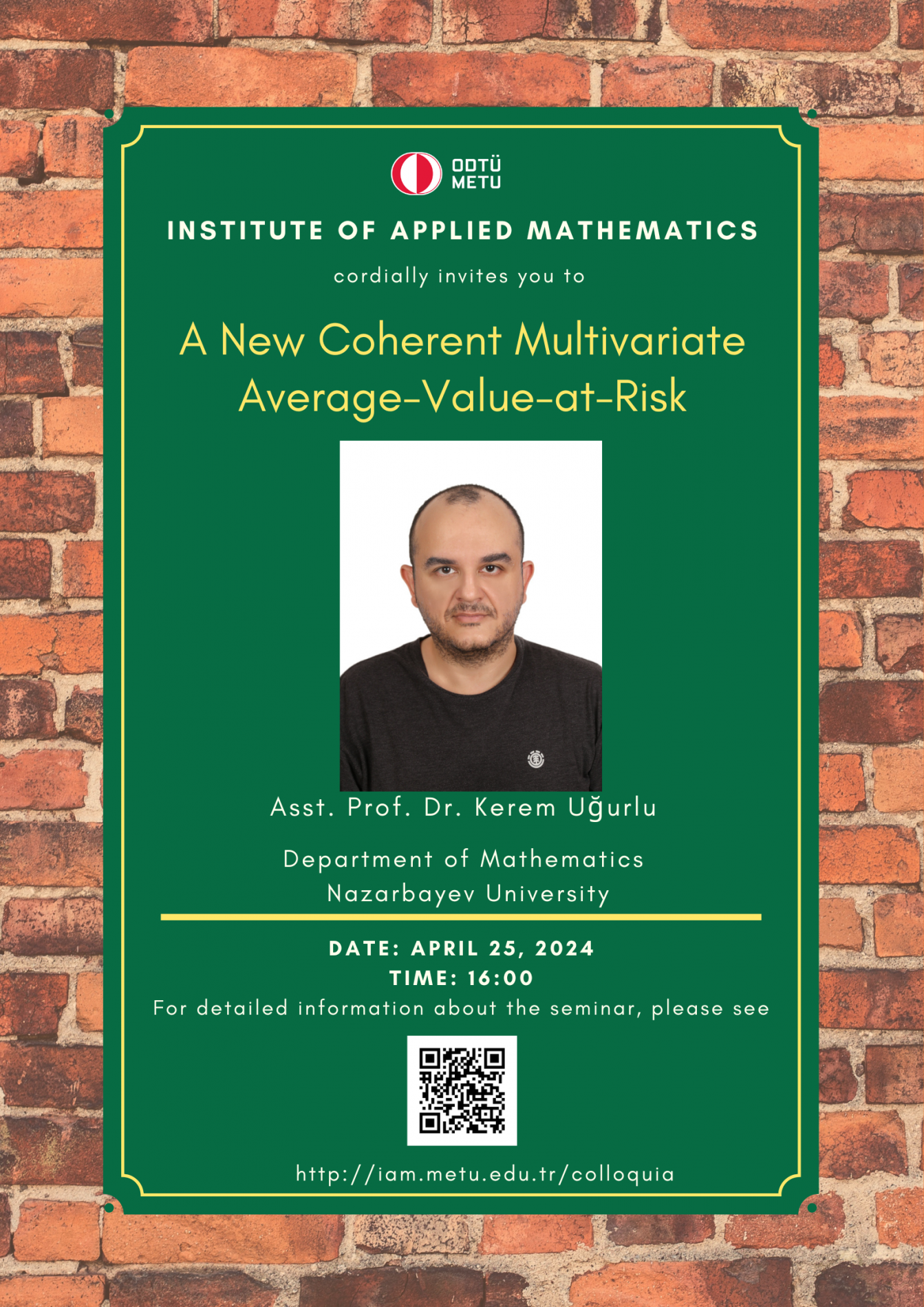
Affiliation: Nazarbayev University, Kazakhstan Speaker: Kerem Ugurlu Date/Time: 25.04.2024 - 16.00 Place: Online Abstract: A new operator for handling the joint risk of different sources has been presented. A multivariate risk measure, so-called multivariate average-value-at-risk, mAVaRα, is proposed to quantify the total risk. It is shown that the proposed operator satisfies the four axioms of a coherent risk measure. |
 |
|
Speaker: Ozan Tuğluk Date/Time: 04.04.2024 - 14.30 Abstract: Scientific data compression is a much cheaper alternative to constantly expanding data storage units. Our approach involves compressing the data so that a prescribed loss is guaranteed on the quantities of interest. We present our compression tool MGARD (MultiGrid Adaptive Reduction of Data). |
 |
|
Affiliation: Technische Universität Chemnitz Speaker: Max Winkler Date/Time: 07.03.2024 - 14.30 Abstract: We study an optimization problem for pedestrian dynamics aiming at a fast evacuation of a crowd. We add agents which have the ability to locally attract other pedestrians. By optimizing their trajectory and attraction intensity, the evacuation might be much faster. We provide existence results and optimality conditions. |
 |
|
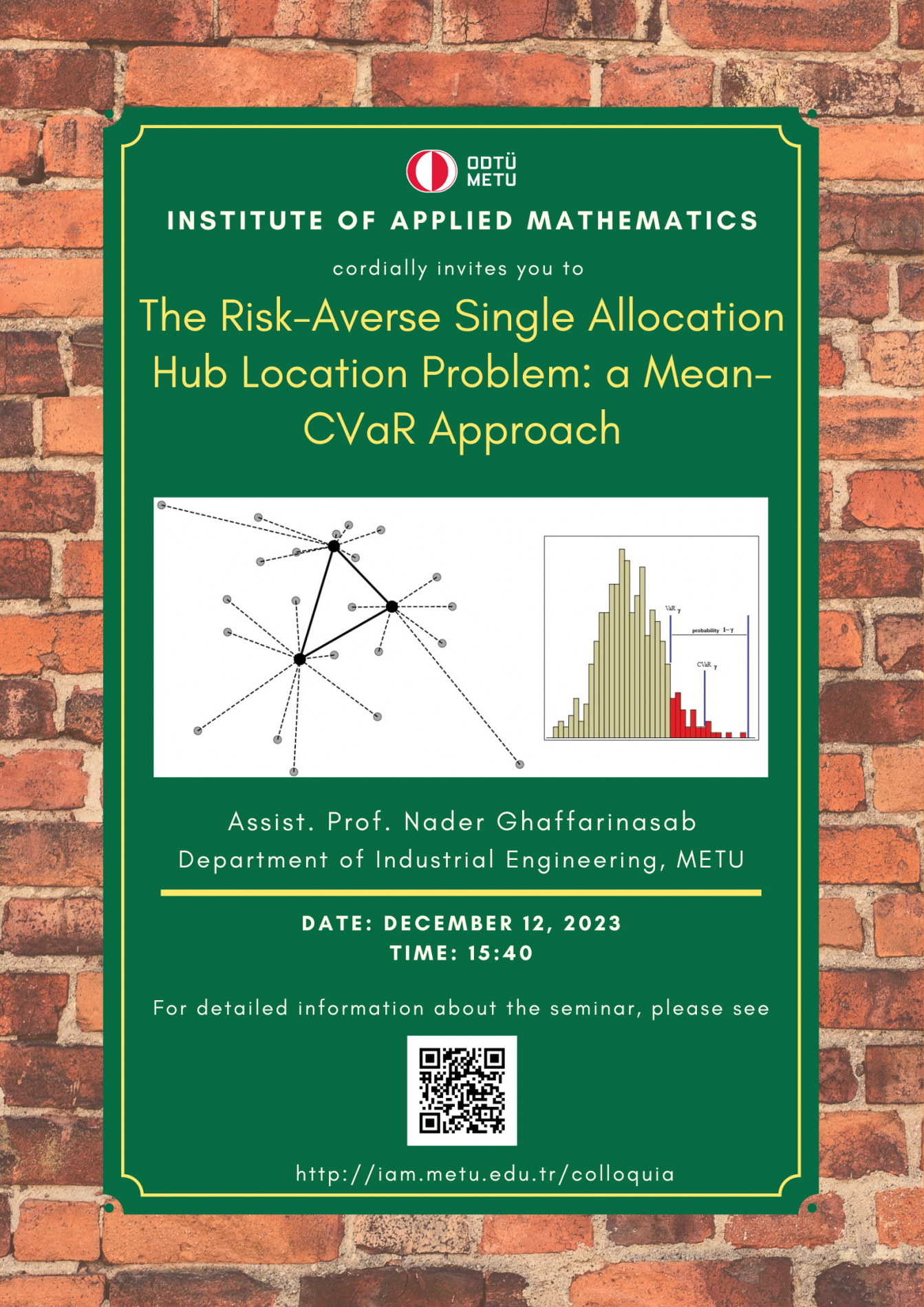
Affiliation: Middle East Technical University Speaker: Nader Ghaffarinasab Date/Time: 12.12.2023 - 15.40 Abstract: The hub location problem (HLP) is a fundamental facility planning problem. In this talk, a risk-averse single allocation HLP, where traffic volume is uncertain, is addressed. The problem is cast as a risk-averse two-stage stochastic problem using mean-CVaR, and a novel solution approach combining Benders decomposition is proposed. |
 |
|
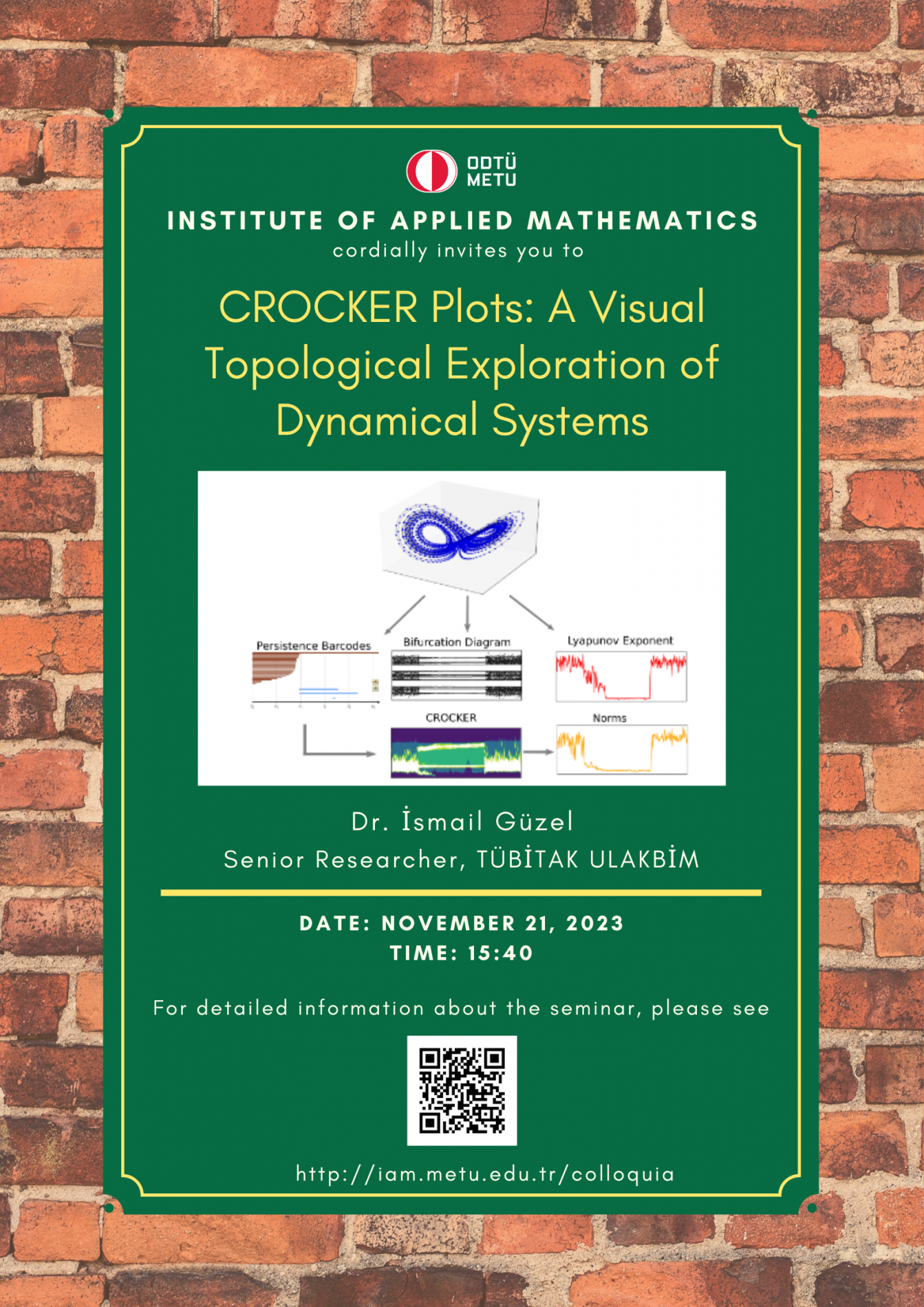
Affiliation: Senior Researcher, TÜBİTAK ULAKBİM Speaker: İsmail Güzel Date/Time: 21.11.2023 - 15.40 Abstract: CROCKER Plots: A Visual Topological Exploration of Dynamical systems. This seminar explores visual methods for topological data analysis. |
 |
|
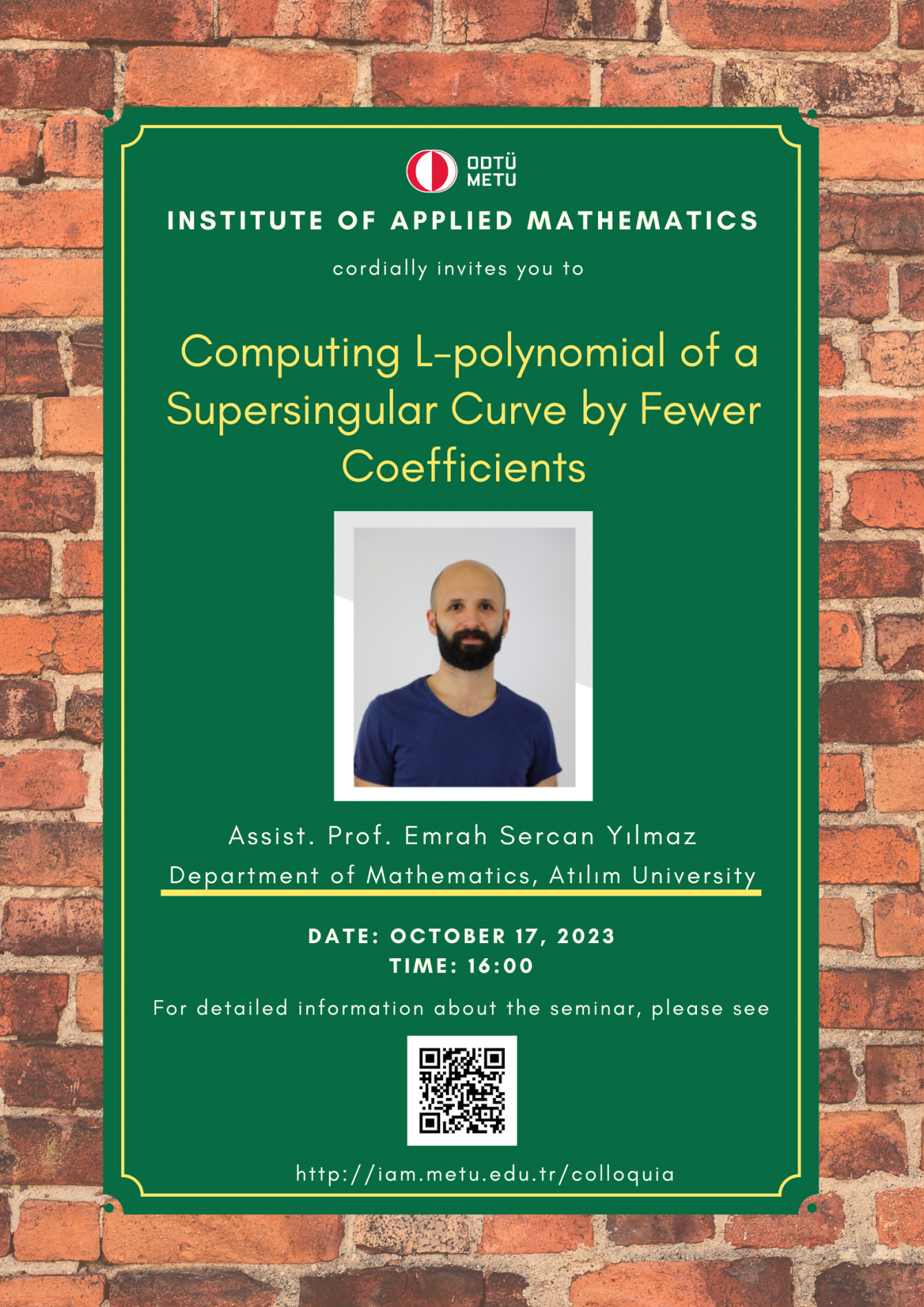
Affiliation: Atılım University Speaker: Emrah Sercan Yılmaz Date/Time: 17.10.2023 - 16.00 Abstract: The L-polynomial of a curve of genus g is determined by g coefficients. We show that the L-polynomial of a supersingular curve of genus g is determined by fewer than g coefficients. We characterize which coefficients are needed. |
 |
|
Affiliation: IBM Research Europe Speaker: Luca De Feo Date/Time: 20.06.2023 - 15.30 Abstract: SQIsign is a very compact signature scheme based on isogenies of supersingular elliptic curves. In this talk, I will present the theory behind SQIsign, and the necessary steps to give a complete and efficient implementation. |
 |
|
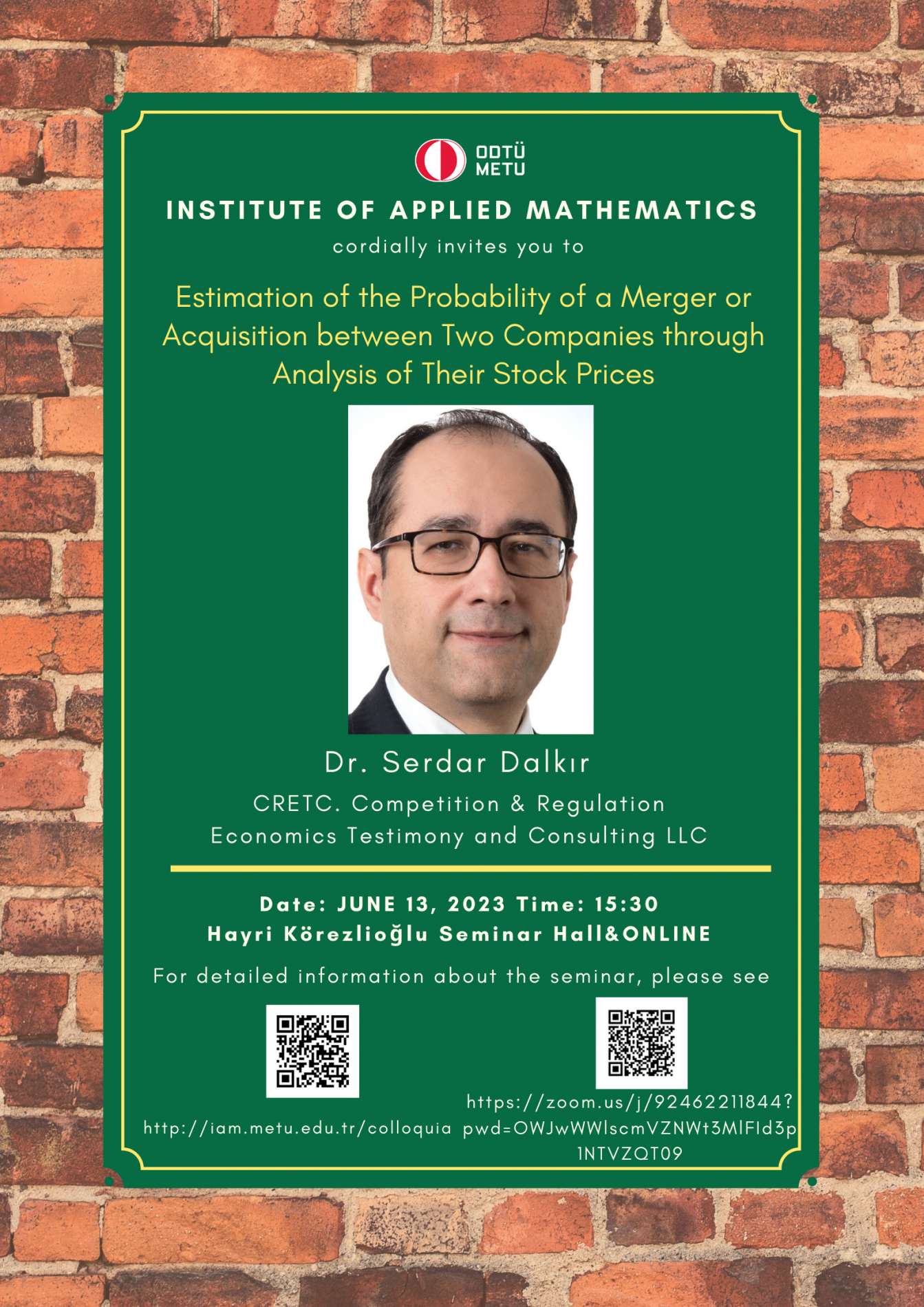
Affiliation: CRETC LLC Speaker: Dr. Serdar Dalkır Invited by: Prof. Dr. A. Sevtap Selçuk Kestel Date/Time: 13.06.2023 - 15.30 Abstract: Estimation of the Probability of a Merger or Acquisition between Two Companies through Analysis of Their Stock Prices. Customary event studies implicitly assume linear probability. We explore cases where true probability behaves differently. |
 |
|
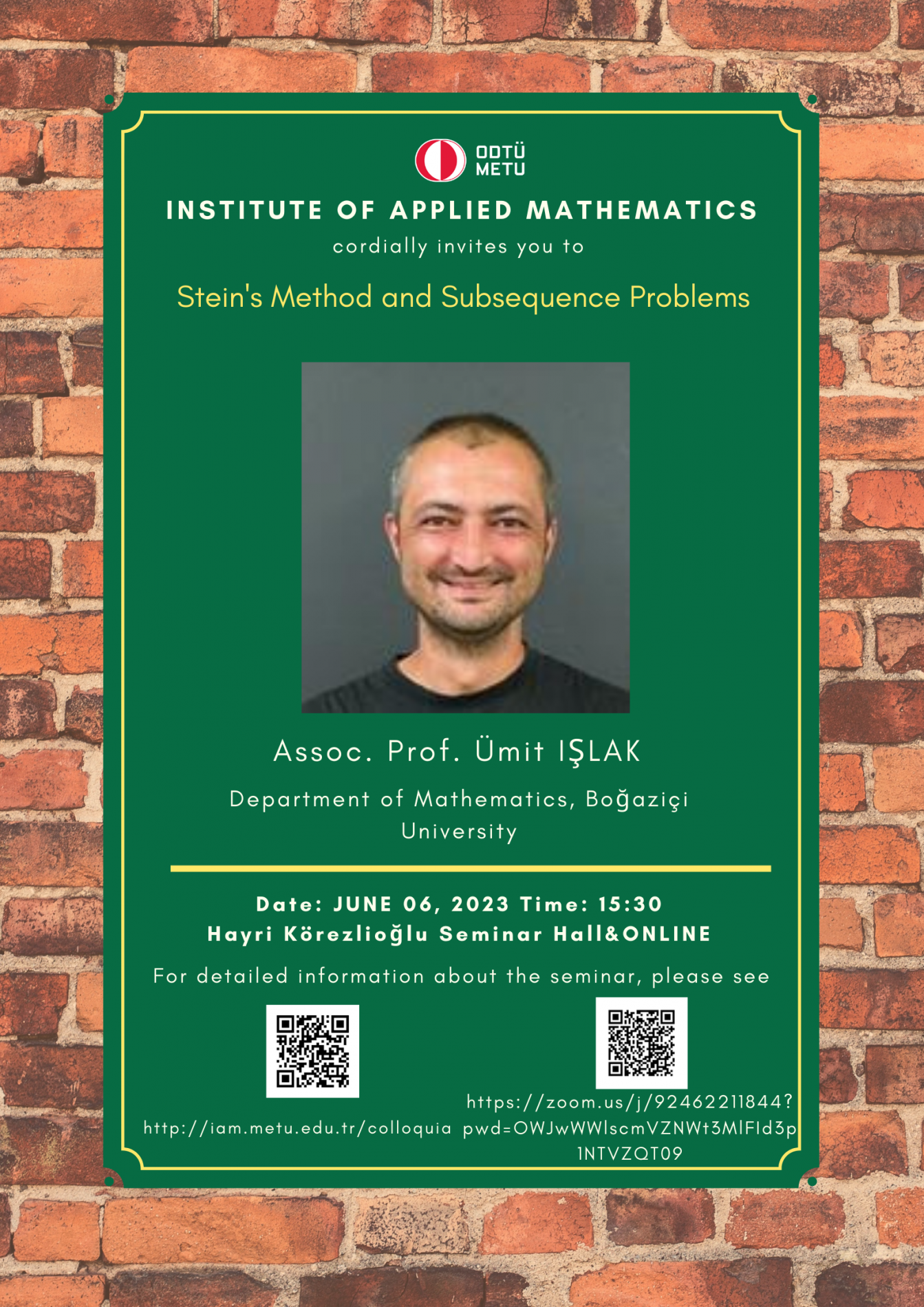
Note: Cancelled due to speaker's illness. Affiliation: Boğaziçi University Speaker: Ümit Işlak Abstract: The talk was intended to cover Stein's method and random permutation statistics, discussing results on the longest common subsequence problem. |
 |
|
Affiliation: Monash University Speaker: Muhammed Esgin Invited by: Assoc. Prof. Dr. Oğuz YAYLA Date/Time: 30.05.2023 - 14.00 Abstract: Verifiable Random Functions (VRFs) are important cryptographic tools used in Proof-of-Stake based blockchain protocols. This talk covers recent advances in constructing practical VRFs based on post-quantum security assumptions, particularly lattices and hash functions. |
 |
|
Affiliation: Atılım University Speaker: Burcu Gülmez Temür Invited by: Buket Özkaya Date/Time: 09.05.2023 - 15.30 Abstract: A polynomial g(x) is called a permutation polynomial (PP) whenever the associated function is a permutation. PPs are important in cryptography, coding theory and combinatorial designs. We present our recent results on PPs over finite fields. |
 |
|
Affiliation: NIST Speaker: Meltem Sönmez Turan Invited by: Oğuz Yayla Date/Time: 02.05.2023 - 15.30 Abstract: This talk includes an overview of the NIST Lightweight Cryptography Standardization process and explains the evaluation of the finalists, the selection of Ascon as the winner and the final steps in the standardization process. |
 |
|
Affiliation: Çankaya University Speaker: Mustafa Alp Ertem Invited by: Prof. Dr. Sevtap Kestel Date/Time: 18.04.2023 - 15.30 Abstract: We propose a mathematical model for utilizing intermodal transportation (road, rail, sea) using standard containers for delivering relief supplies after disasters. The model is tested with real-life parameters from the Turkish Disaster and Emergency Management Presidency. |
 |
|
Affiliation: Innopolis University Speaker: Sergei Savin Abstract: Orthogonal decomposition-based transformations for solving control problems in walking robotics, from inverse dynamics to linear quadratic regulation. |
 |
|
Affiliation: University of Ulm, Germany Speaker: Prof. Dr. An Chen Abstract: Studies non-concave optimization problem arising from a managerial board maximizing expected utility under risk-based regulatory constraints. |
 |
|
Affiliation: University of Waterloo, dept. of Statistics, Canada Speaker: Prof. Dr. Adam Kolkiewicz Invited by: A. Sevtap Kestel Date/Time: 24.05.2022 - 15.30 Abstract: It is well known that in a complete financial market, contingent claims can be hedged perfectly without any risk by using a continuously rebalanced hedging portfolio. The number of shares of the underlying risky asset in this portfolio, often referred to as delta or as a hedge ratio, can be obtained through the martingale representation theorem. Such hedging strategies work reasonably well also in practice, where trades occur in discrete times, if the rebalancing periods are not too long. In this talk we will use the Black–Scholes framework to demonstrate that discrete-time hedging of path-dependent options based on the standard delta is significantly less efficient than some of the optimal hedging strategies, regardless of the length of the hedging period. Using an Asian option as an example, we will provide an explanation of this phenomenon and will propose a correction of the standard delta that leads to an asymptotically efficient method. Time permitting, we will also discuss optimal in some sense static hedging methods for path-dependent options. |
 |
|
Affiliation: Mathematical Institute, University of Oxford, UK Speaker: Prof. Dr. Endre Süli Invited by: Önder Türk Date/Time: 17.05.2022 - 15.30 Abstract: The talk is concerned with the convergence analysis of finite element methods for the approximate solution of a system of nonlinear elliptic partial differential equations that arise in models of chemically reacting viscous incompressible fluids. The shear-stress appearing in the model involves a power-law type nonlinearity, where, instead of being a fixed constant, the power law-exponent is a function of a spatially varying nonnegative concentration function, which, in turn, solves a nonlinear convection-diffusion equation. In order to prove the convergence of the sequence of finite element approximations to a solution of this coupled system of nonlinear PDEs, a uniform Holder norm bound needs to be derived for the sequence of finite element approximations to the concentration in a setting, where the diffusion coefficient in the convection-diffusion equation satisfied by the concentration is merely an L^\infty function. This necessitates the development of a finite element counterpart of the De Giorgi--Nash--Moser theory. Motivated by an early paper by Aguilera and Caffarelli (1986) in the simpler setting of Laplace's equation, we derive such uniform Holder norm bounds on the sequence of continuous piecewise linear finite element approximations to the concentration. We then use this to deduce the convergence of the sequence of finite element approximations to a solution of the coupled system of nonlinear PDEs under consideration. The talk is based on joint work with Seungchan Ko and Petra Pustejovska, and recent results obtained in collaboration with Lars Diening and Toni Scharle. |
 |
|
Affiliation: Risk consultant, Germany Speaker: Dr. Martin Rainer Invited by: A. Sevtap Kestel Date/Time: 19.04.2022 - 15.30 (Istanbul time) Abstract: The relative pricing method is reviewed under stochastic aspects. Traditional applications are e.g. forward rate simulations and FX quanto adjustments. After looking at some problems of the conventional numeraire, the concept of relative pricing w.r.t. economically key assets will be explained. Considerable advantages of this method over conventional pricing show up in contexts for increasing ecological sustainability e.g. by carbon pricing, or for economic stabilisation of critical resource prices such as agricultural commodities or energy. (Joint work with Dr. S. Aydın based on recent paper https://www.tandfonline.com/doi/full/10.1080/20430795.2020.1769983.) |
 |
|
Affiliation: Sabancı University, Computer Science and Engineering, Turkey Speaker: Assoc. Prof. Dr. Kamer Kaya Invited by: Oğuz Yayla Date/Time: 12.04.2022 - 15.30 Abstract: The permanent is an important characteristic of a matrix and it has been used in many applications, e.g., order statistics and quantum computing. Unfortunately, it is a hard to compute and hard to approximate immanant. For dense/full matrices, the fastest exact algorithm, Ryser, has O(n x 2^(n-1)) complexity. In this seminar, we will talk about permanents for (mainly sparse) matrices, their relation with some graph-theoretic problems, and how to compute/approximate them in parallel by using manycore CPUs and multicore GPUs. |
 |
|
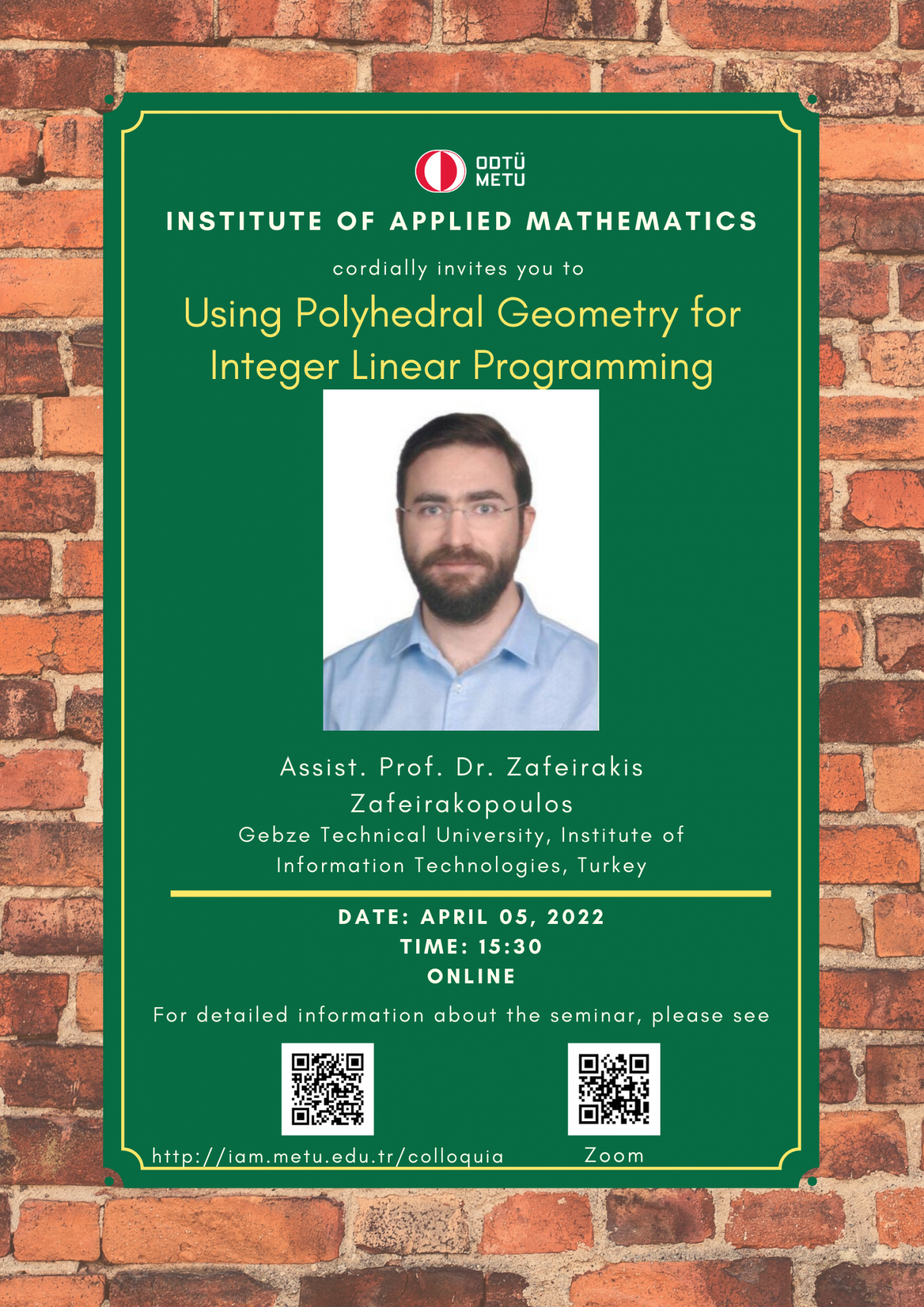
Affiliation: Gebze Technical University, Institute of Information Technologies, Turkey Speaker: Assist. Prof. Dr. Zafeirakis Zafeirakopoulos Invited by: Oğuz Yayla Date/Time: 05.04.2022 - 15.30 Abstract: Polyhedral Omega is an algorithm for solving linear Diophantine systems (LDS), i.e., for computing a multivariate rational function representation of the set of all non-negative integer solutions to a system of linear equations and inequalities. Polyhedral Omega combines methods from partition analysis with methods from polyhedral geometry. In particular, we combine MacMahon’s iterative approach based on the Omega operator and explicit formulas for its evaluation with geometric tools Bundled with Brion decomposition and Barvinok’s short rational function representations. This synthesis of ideas makes Polyhedral Omega by far the simplest algorithm for solving linear Diophantine systems available to date. After solving the feasibility problem of Integer Linear Programming (ILP), we will see how to use Polyhedral Omega for optimization. |
 |
|
Affiliation: University of Liverpool-IFAM, UK Speaker: Prof. Dr. Corina Constantinescu Date/Time: 15.03.2022 - 15.30 Abstract: Inspired by the double-debt problem in Japan where the mortgagor has to pay the remaining loan even if their house was destroyed by a catastrophic event, we model the lender's cash flow by an exponential functional of a renewal-reward process. We propose an insurance add-on to the loan repayments and analyse the asymptotic behavior of the distribution of the first hitting time, which represents the probability of full repayment. We show that the finite-time probability of full loan repayment converges exponentially fast to the infinite-time one. In a few concrete scenarios, we calculate the exact form of the infinite-time probability and the corresponding premiums. This is joint work with J. Akahori, Y. Imamura and H. Pham. |
 |
|
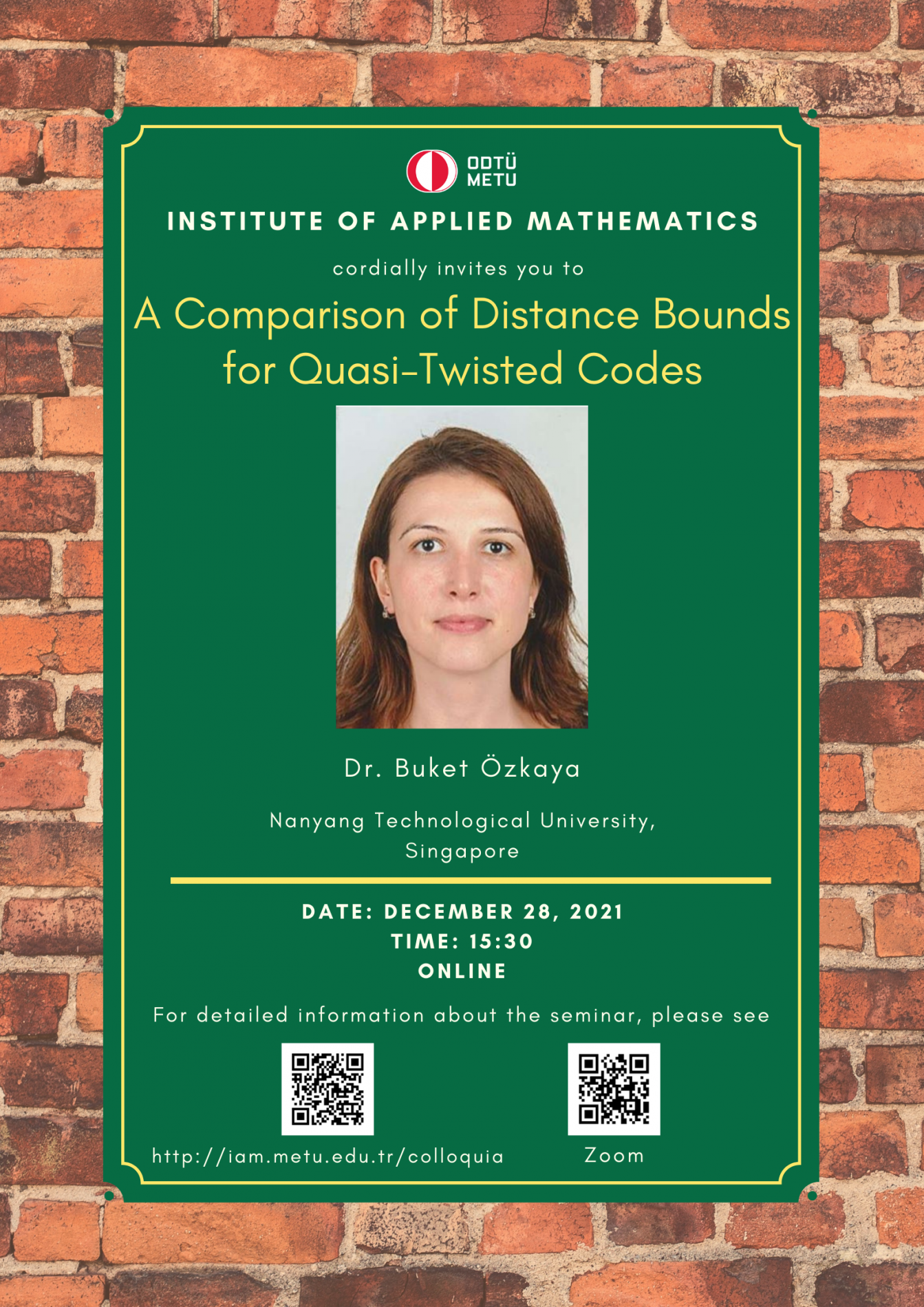
Affiliation: Nanyang Technological University Speaker: Dr. Buket Özkaya Invited by: Ferruh Özbudak Date/Time: 28.12.2021 - 15.30 Abstract: Spectral bounds on the minimum distance of quasi-twisted codes over finite fields are proposed, based on eigenvalues of polynomial matrices and the corresponding eigenspaces. They generalize the Semenov-Trifonov and Zeh-Ling bounds in a way similar to how the Roos and shift bounds extend the BCH and HT bounds for cyclic codes. The eigencodes of a quasi-twisted code in the spectral theory and the outer codes in its concatenated structure are related. A comparison based on this relation verifies that the Jensen bound always outperforms the spectral bound under special conditions, which yields a similar relation between the Lally and the spectral bounds. The performances of the Lally, Jensen and spectral bounds are presented in comparison with each other. |
 |
|
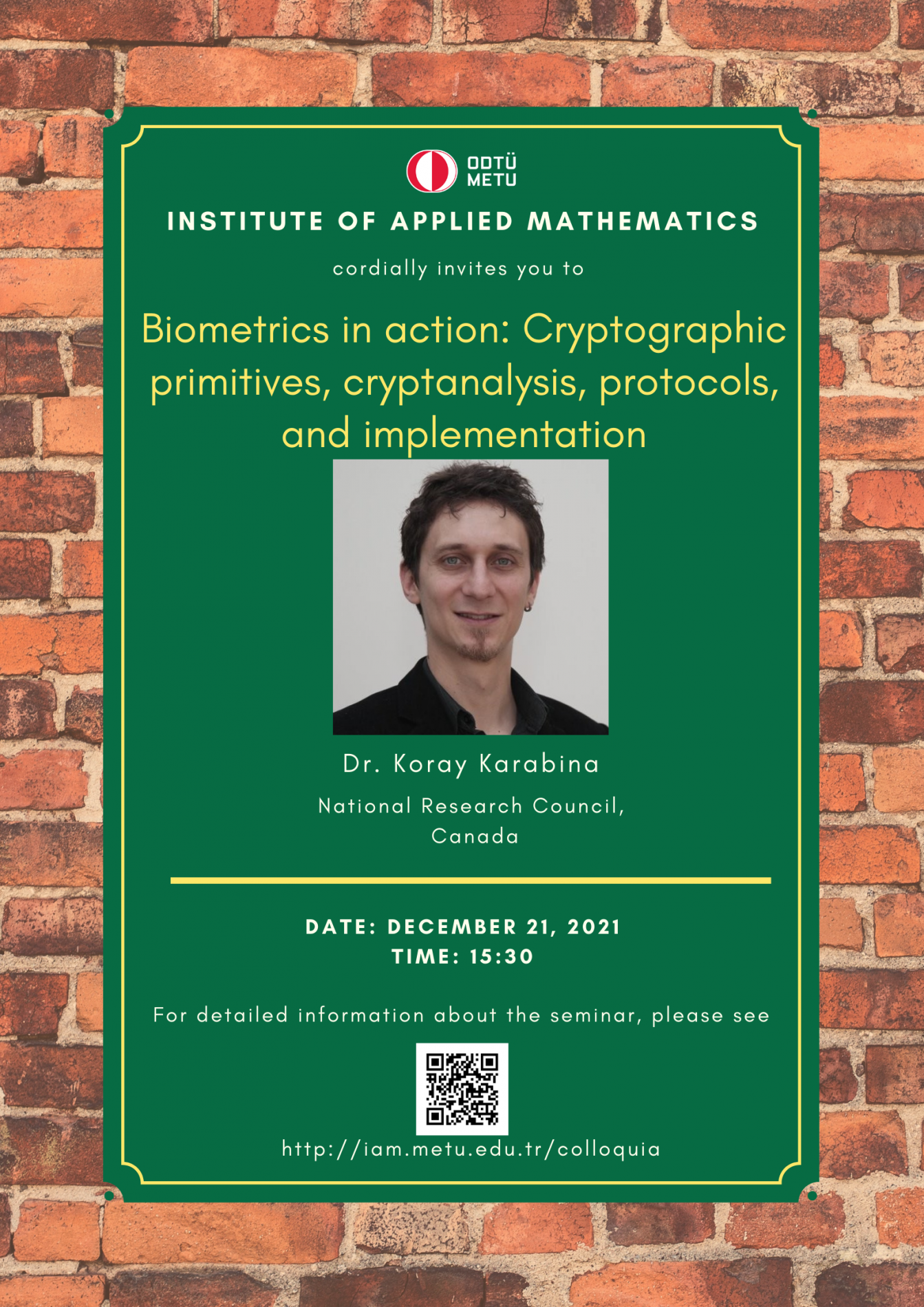
Affiliation: National Research Council, Canada Speaker: Dr. Koray Karabina Invited by: Murat Cenk Date/Time: 21.12.2021 - 15.30 Abstract: Password-based and single-factor authentication mechanisms have shown to be ineffective due to several convenience and security related challenges (e.g. generating and recalling strong passwords). Multi-factor authentication services try to remedy this situation by upgrading the static nature of passwords through the use of fresh and high-entropy tokens. Another limitation of authentication services is that they are designed to authenticate users only at the beginning of their session. Therefore, attackers who bypass the one-time initial authentication can have long-term unauthorized control of that session. Biometrics based continuous authentication protocols promise efficient, convenient, and secure alternatives to traditional authentication services. However, we face a number of challenges at different levels: how to design cryptographic primitives for biometrics?, how to design and implement continuous authentication protocols?, and how to justify the security of the system in the end? In this talk, I will discuss some of these challenges and present our recent protocol PACA: A Privacy aware continuous authentication protocol. |
 |
|
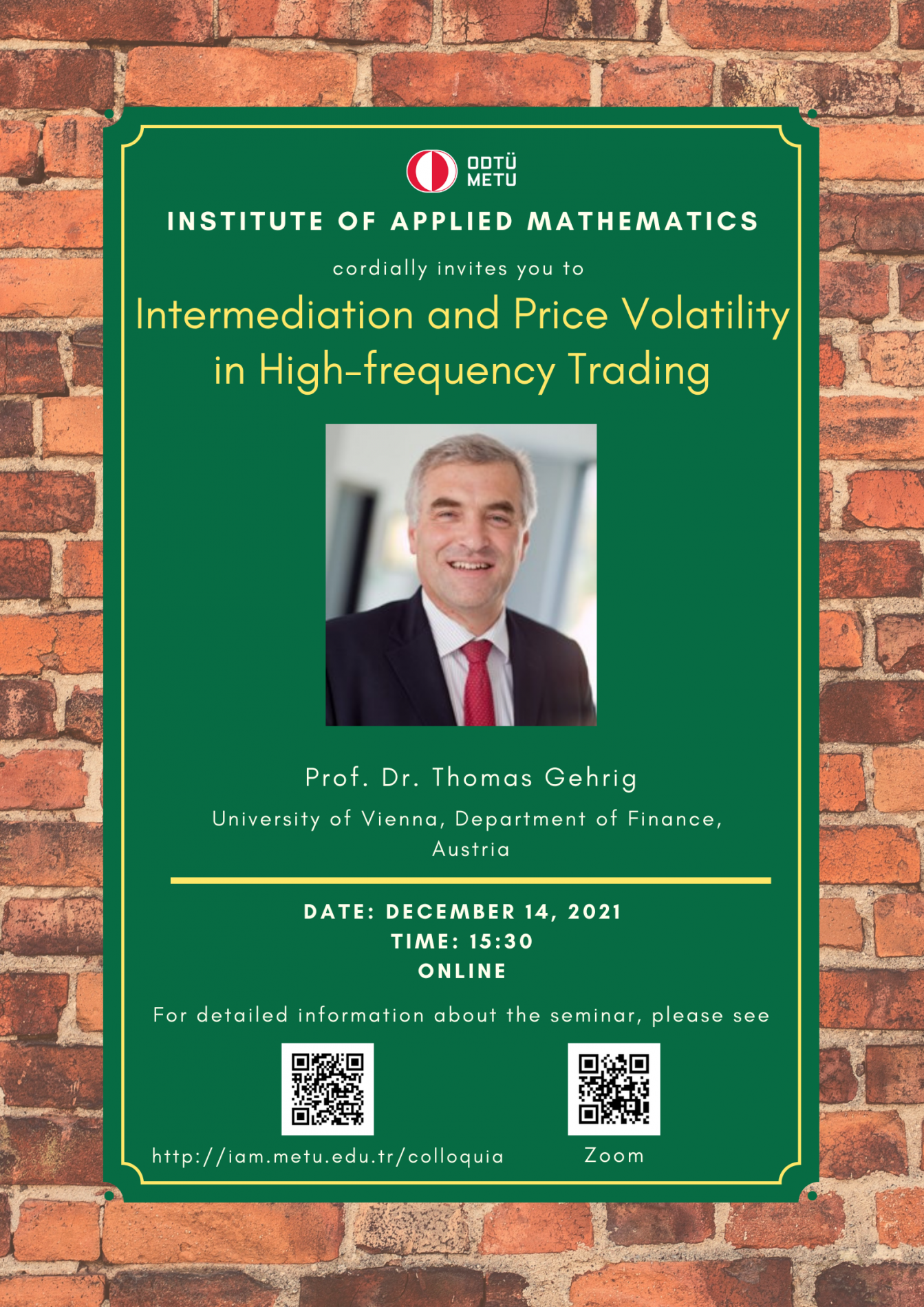
Affiliation: University of Vienna, Department of Finance Speaker: Prof. Dr. Thomas Gehrig Invited by: Prof. Dr. Sevtap Kestel Date/Time: 14.12.2021 - 15.30 Abstract: This study analyses the role of intermediaries in providing immediacy in fast markets. Fast markets are modelled as contests with the possibility of multiple winners where the probability of casting the best quote depends on prior technology investments. Depending on the market design, equilibrium pricing by intermediaries involves a trade-off, between monopolistic price distortion and excess volatility. Since equilibrium at the pricing stage generates an externality, investments into faster trading technologies are necessarily asymmetric in equilibrium, akin to markets with vertical product differentiation. Further, equilibrium is not necessarily effcient, since it is possible that a high-cost intermediary ends up investing excessively and thus trades more frequently than low-cost rivals. |
 |
|
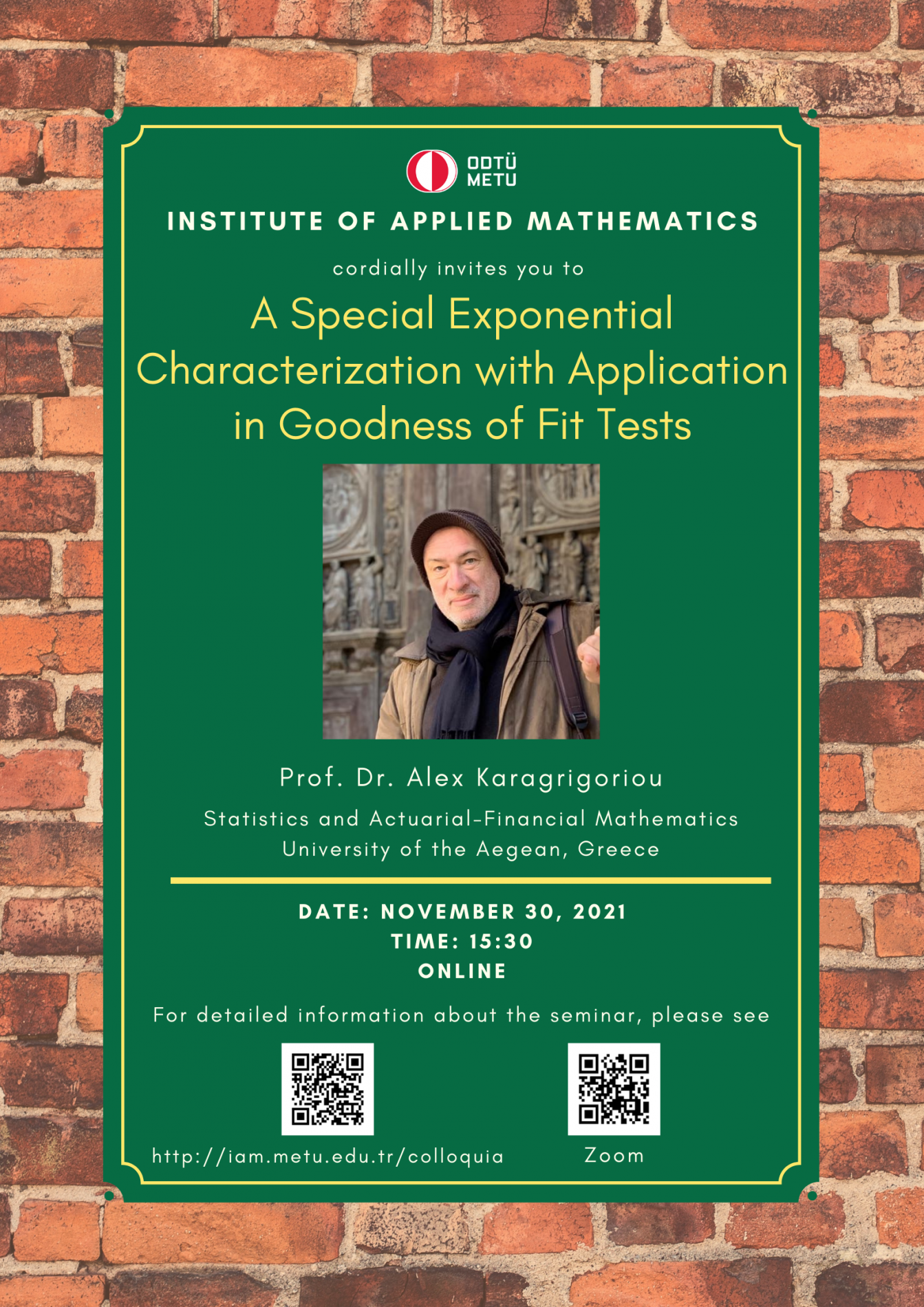
Affiliation: Statistics and Actuarial-Financial Mathematics University of the Aegean, Greece Speaker: Prof. Dr. Alex Karagrigoriou Invited by: Azize Hayfavi Date/Time: 30.11.2021 - 15.30 Abstract: This work is filling up the gap in the literature regarding the verification of the log-concavity property which is a widely studied topic due to the fact that it provides desirable estimating properties. At the same time, it is vital in reliability, engineering and stochastic modeling for distinguishing between an exponential, a light-tailed and a heavy tailed distribution. In this work we propose an exponentiality test of fit to be used for distinguishing between exponential and log-convex or long-concave distributions. The proposed test statistic is based on the conspiracy and catastrophe principles and establishes a characterization for the exponential distribution. The details of the formulation of the test are provided, an extended simulated study which shows the performance of the proposed test statistic is given, and some concluding remarks are stated. |
 |
|
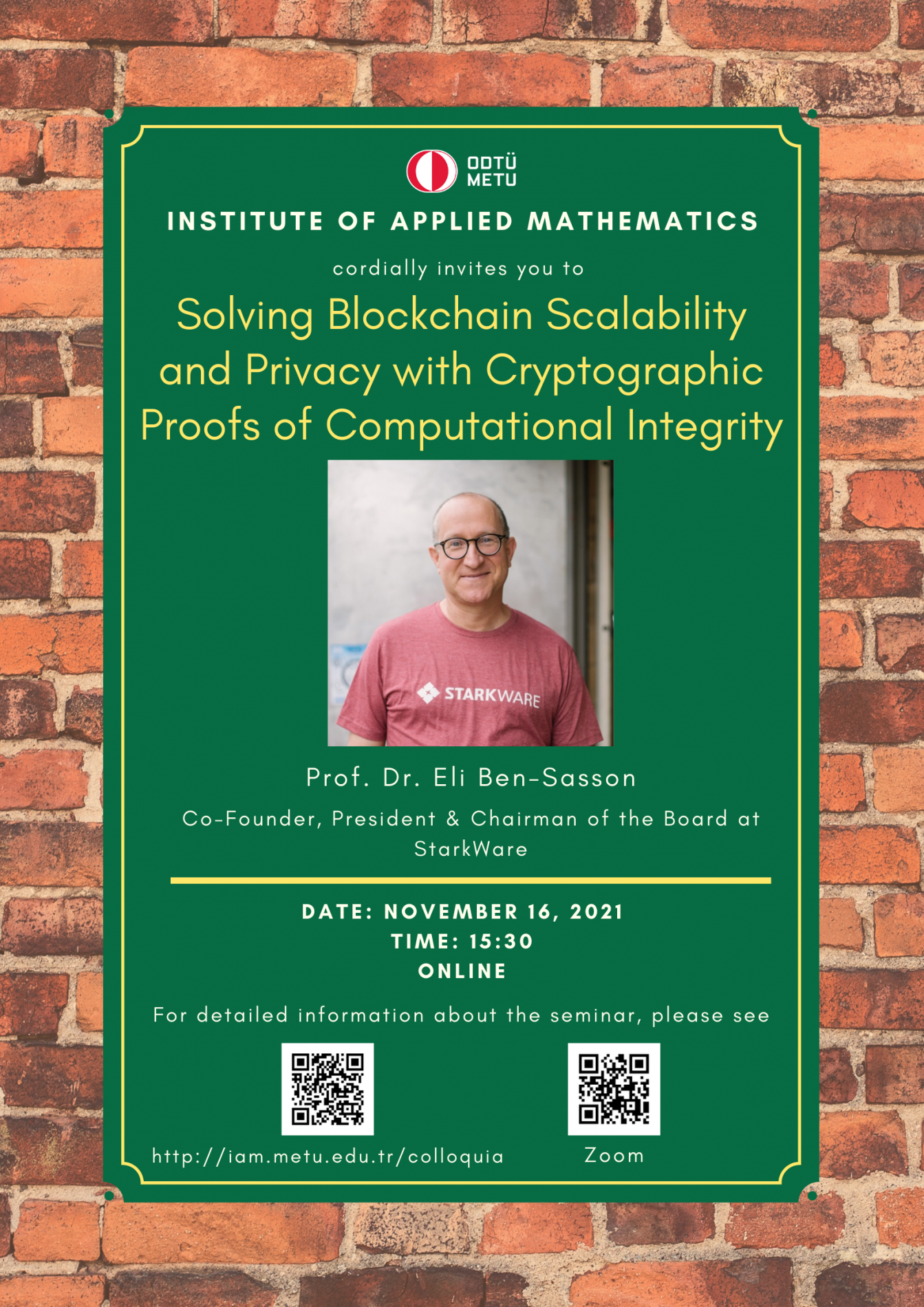
Speaker: Prof. Dr. Eli Ben-Sasson Invited by: Assist. Prof. Dr. Oğuz Yayla Date/Time: 16.11.2021 - 15.30 Abstract: Blockchains remove the need for trusted mediators (like banks), replacing them with trust based on Inclusive Accountability, which means that anyone with a laptop is invited to hold the blockchain accountable by inspecting all that transpires on it. However, If all may inspect the full blockchain, then privacy erodes. And if you insist on allowing anyone with a laptop to inspect all transactions, then the blockchains throughput must be capped. Is this inevitable? Cryptographic proofs, invented in the 1980's allow us to have our privacy+scalability cake and eat it too. ZK-STARKs are a culmination of three decades of academic research into cryptographic proofs, are best in class when it comes to scale and security, and are leading the pack in blockchain scalability. This talk will discuss the theory-to-product route taken by StarkWare, a company founded to implement ZK-STARK technology on blockchains, which is soon launching a layer-2 for Ethereum called StarkNet that makes cryptographic proofs accessible to all decentralized app developers. |
 |
|
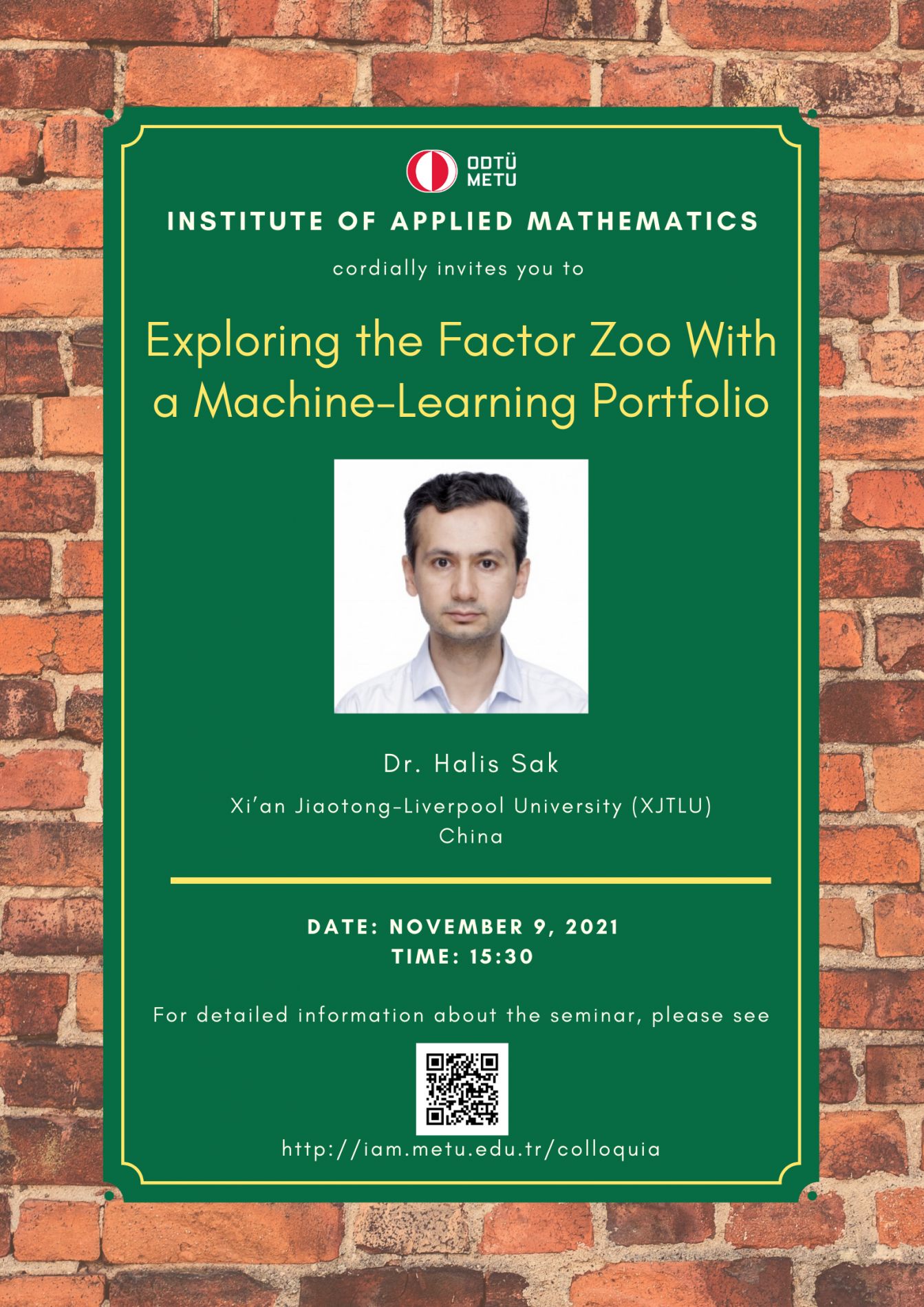
Affiliation: Hong Kong University of Science and Technology Speaker: Dr. Halis Sak Invited by: Prof. Dr. Devin A. Sezer Date/Time: 09.11.2021 - 15.30 Abstract: Over the years, top journals have published hundreds of characteristics to explain stock return, but many have lost significance. What fundamentally affects the time-varying significance of characteristics? We combine machine-learning (ML) and portfolio analysis to uncover patterns in significant characteristics. We train ML models on 106 characteristics to predict stock returns. From out-of-sample ML portfolio analysis, we reverse-engineer important characteristics that ML models uncover, which are unobservable. The ML portfolio's dominant characteristics rotate between proxies for investor arbitrage constraint and firm financial constraint. We show that the credit cycle could fundamentally explain cross-sectional stock return over time. |
 |
|
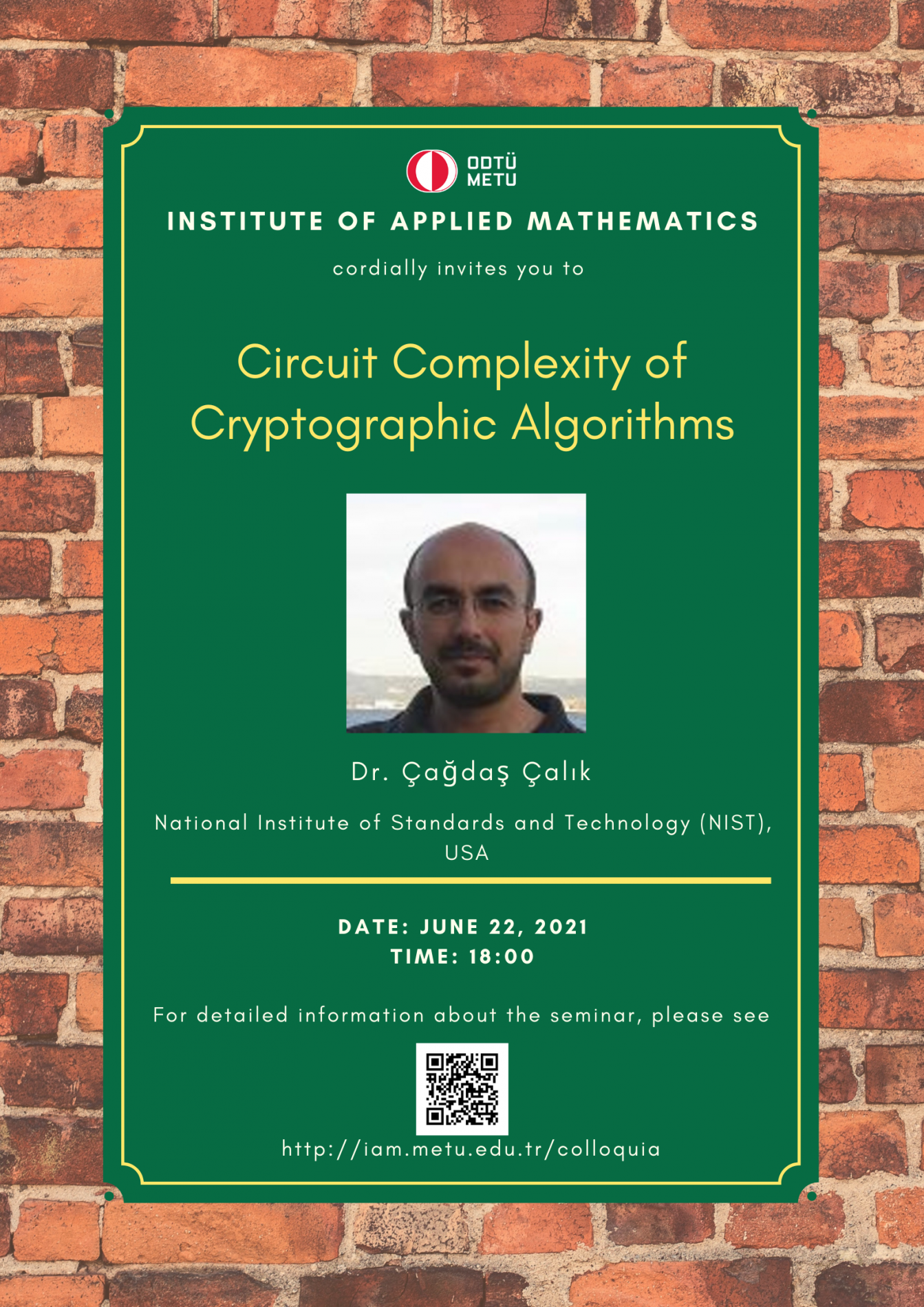
Speaker: Dr. Çağdaş Çalık Invited by: Sevtap Kestel Date/Time: 22.06.2021 - 18.00 Abstract: Algorithms are expressed as circuits consisting of logic gates (including other components) when they are implemented in hardware. Various characteristics of circuits can be used as metrics for optimization, which are defined by the requirements of specific applications; such as minimizing the total number of gates for low chip area, or minimizing the depth of the circuit for low latency. One particular metric of interest for cryptographic applications is the multiplicative complexity of functions, which is defined as the minimum number of 2-input AND gates that is necessary and sufficient to implement it over the basis of XOR, AND, and NOT gates. Multiplicative complexity is not only an indicator of the complexity of a function but it is also related to the cost of protecting an implementation against side-channel attacks as nonlinear gates are more expensive to protect than linear gates. This talk will highlight circuit complexity results from the literature within the context of cryptographic algorithms and protocols, and demonstrate the implications of constructing better circuits for real world applications. |
 |
|
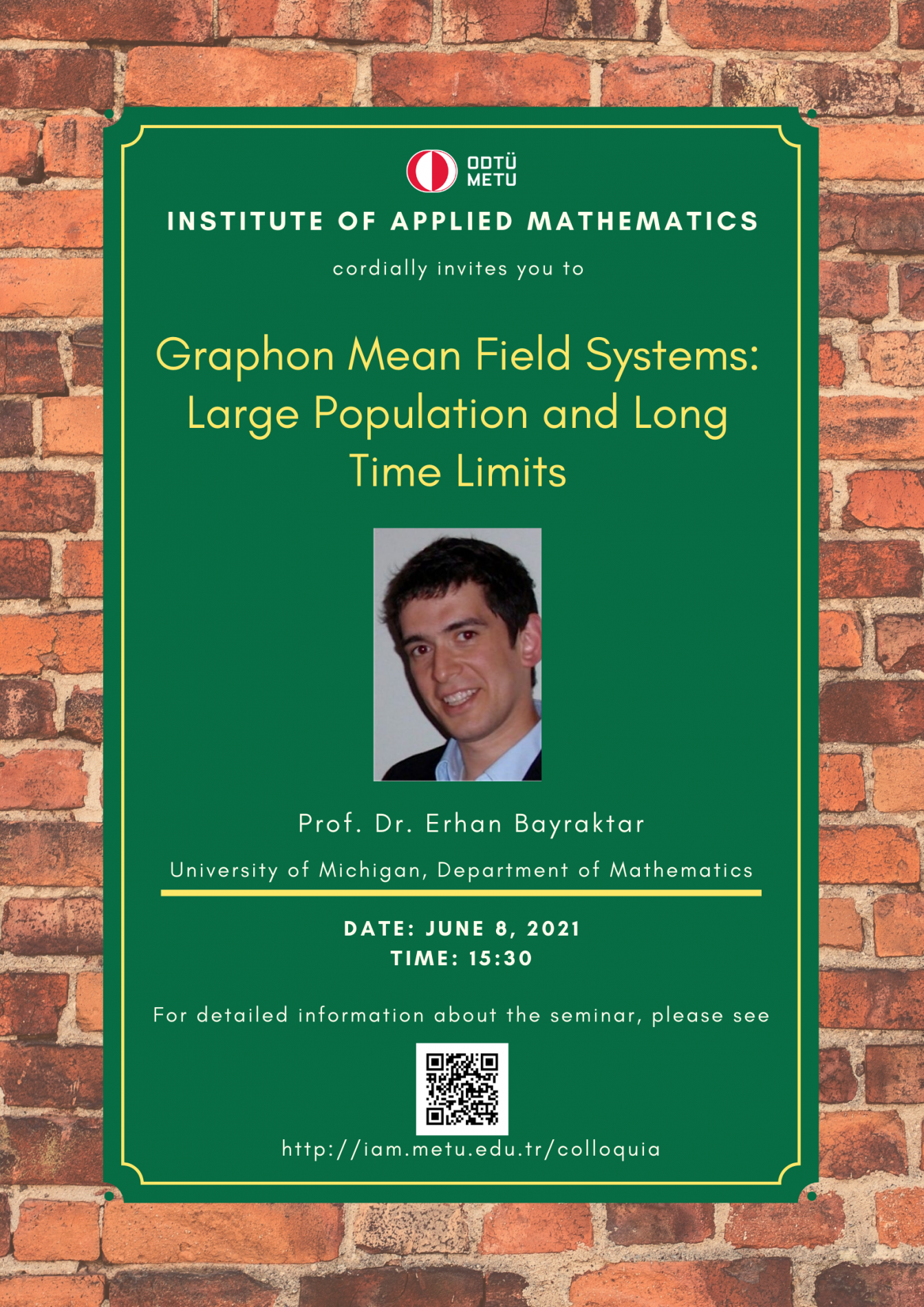
Affiliation: University of Michigan, USA Speaker: Prof. Dr. Erhan Bayraktar Invited by: Sevtap Kestel Date/Time: 08.06.2021 - 15.30 Abstract: We consider heterogeneously interacting diffusive particle systems and their large population limit. The interaction is of mean field type with random weights characterized by an underlying graphon. The limit is given by a graphon particle system consisting of independent but heterogeneous nonlinear diffusions whose probability distributions are fully coupled. A law of large numbers result is established as the system size increases and the underlying graphons converge. Under suitable additional assumptions, we show the exponential ergodicity for the system, establish the uniform in time law of large numbers, and introduce the uniform in time Euler approximation. The precise rate of convergence of the Euler approximation is provided. Based on joint works with Suman Chakraborty and Ruoyu Wu. |
 |
|
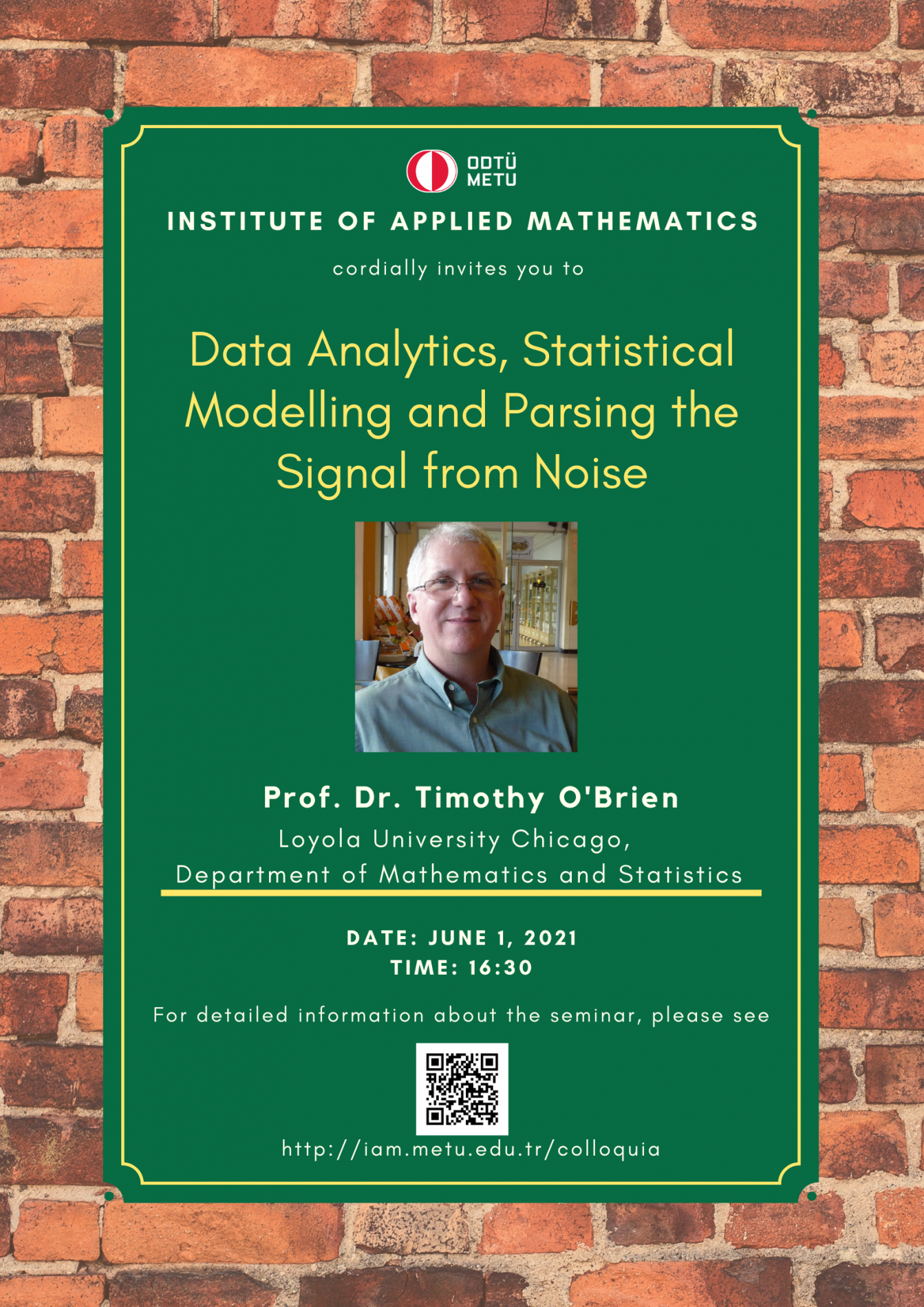
Affiliation: Loyola University Chicago, USA Speaker: Prof. Dr. Timothy O'Brien Invited by: Sevtap Kestel Date/Time: 01.06.2021 - 16.30 Abstract: Longitudinal data are ubiquitous in biomedical research, economics, environmental research, psychometrics as well as many other domains, and analysis of these data present unique and far-reaching challenges in applied statistical research. These data often also contain latent (hidden) cohorts/groups, which - with the aid of the EM algorithm and associated methods - can be discerned in order to help researchers in better understanding their data and underlying phenomena. Although the fields of Finite Mixture Models and Trajectory Analysis in the context of longitudinal data analysis is relatively new, controversy exists as to how best to discern these patterns and data. This talk focuses on the larger field of estimation and design of longitudinal data, with an eye to trajectory analysis and finite mixture models in modelling nonlinear phenomena. We make connections to the linear and generalized linear cases - as well as highlighting important differences and relevant software packages. We also weave in caveats related to over-fitting one's data. |
 |
|
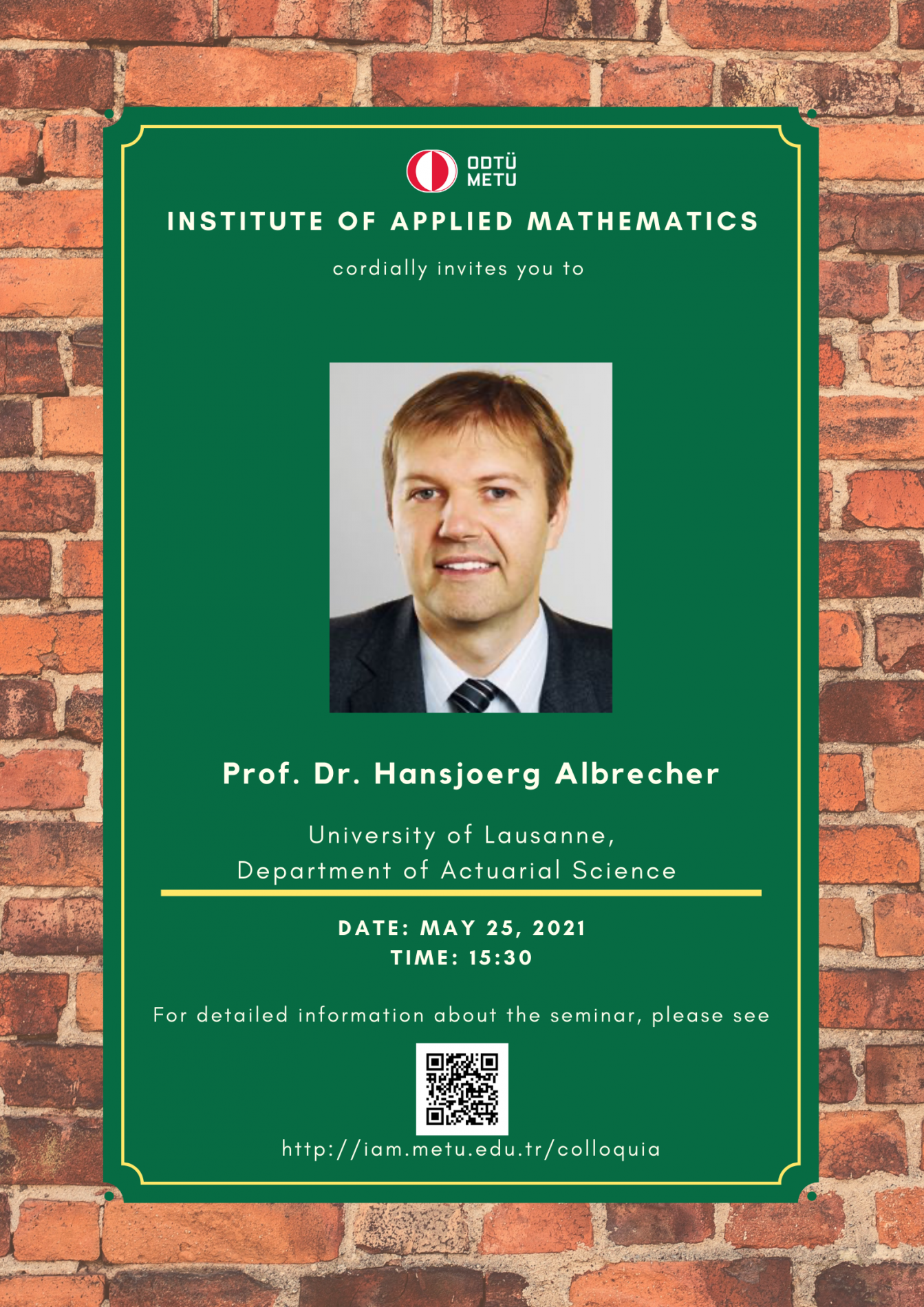
Affiliation: University of Lausanne, Switzerland Speaker: Prof. Dr. Hansjoerg Albrecher Invited by: Sevtap Kestel Date/Time: 25.05.2021 - 15.30 Abstract: Mining blocks on a blockchain equipped with a proof of work consensus protocol is known to be resource-consuming. A miner bears the operational cost, mainly electricity consumption and IT gear, of mining, and is compensated by a capital gain when a block is discovered. In this talk we quantify the profitability of mining when the possible event of ruin is also taken into consideration. This is done by formulating a tractable stochastic model and using tools from actuarial ruin theory and analysis, including the explicit solution of a certain type of advanced functional differential equation. The expected profit at a future time point is determined for the situation when the miner follows the protocol as well as when he/she withholds blocks. The obtained explicit expressions allow to analyze the sensitivity with respect to the different model ingredients and to identify conditions under which selfish mining is a strategic advantage. The talk is based on joint work with P.O. Goffard. |
 |
|
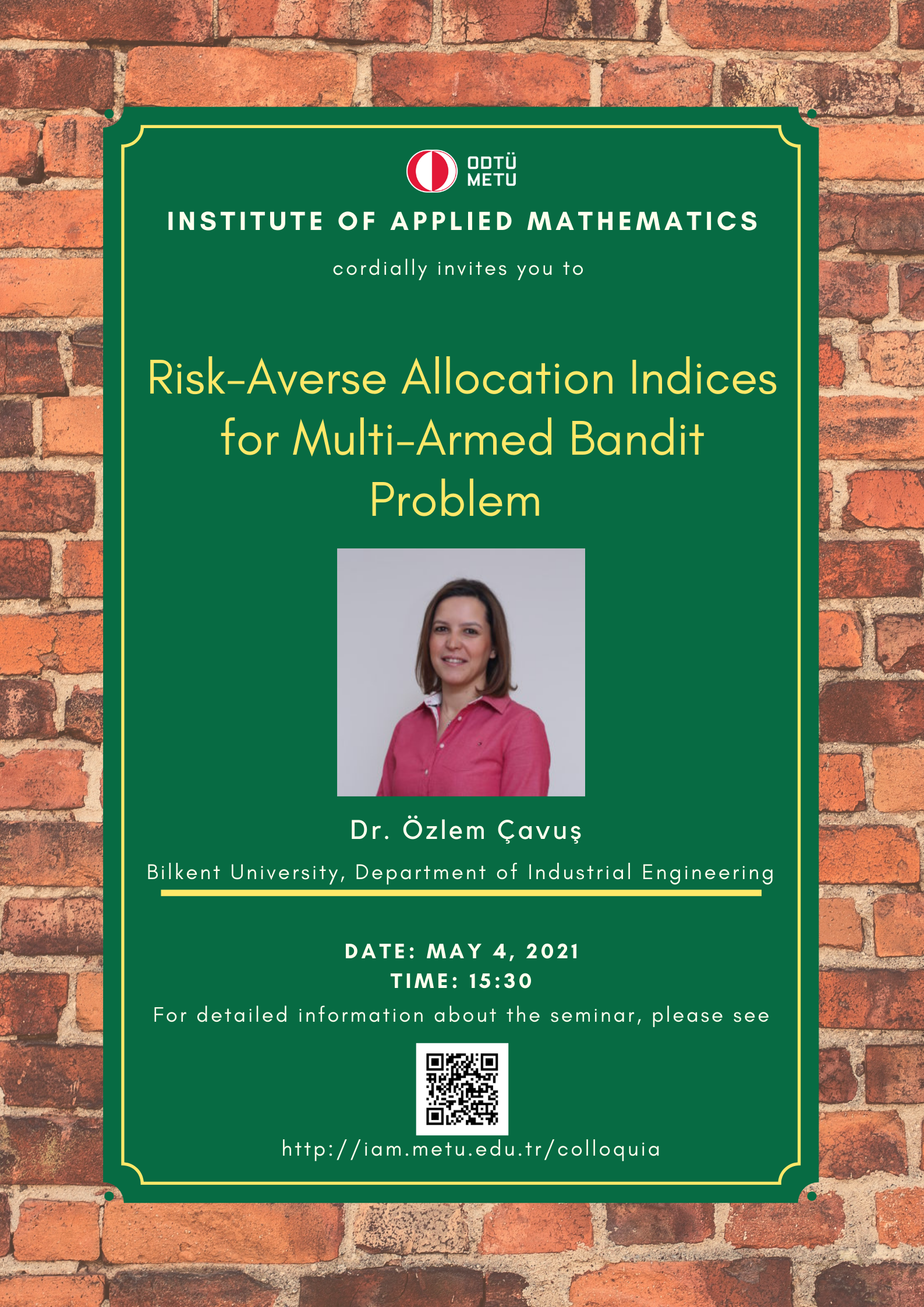
Affiliation: Bilkent University, Turkey Speaker: Assoc. Prof. Dr. Özlem Çavuş Invited by: Sevtap Kestel Date/Time: 04.05.2021 - 15.30 Abstract: In classical multi-armed bandit problem, the aim is to find a policy maximizing the expected total reward, implicitly assuming that the decision maker is risk-neutral. On the other hand, the decision makers are risk-averse in some real life applications. In this study, we design a new setting based on the concept of dynamic risk measures where the aim is to find a policy with the best risk-adjusted total discounted outcome. We provide a theoretical analysis of multi-armed bandit problem with respect to this novel setting, and propose a priority-index heuristic which gives risk-averse allocation indices having a structure similar to Gittins index. Although an optimal policy is shown not always to have index-based form, empirical results express the excellence of this heuristic and show that with risk-averse allocation indices we can achieve optimal or near-optimal interpretable policies. |
 |
|
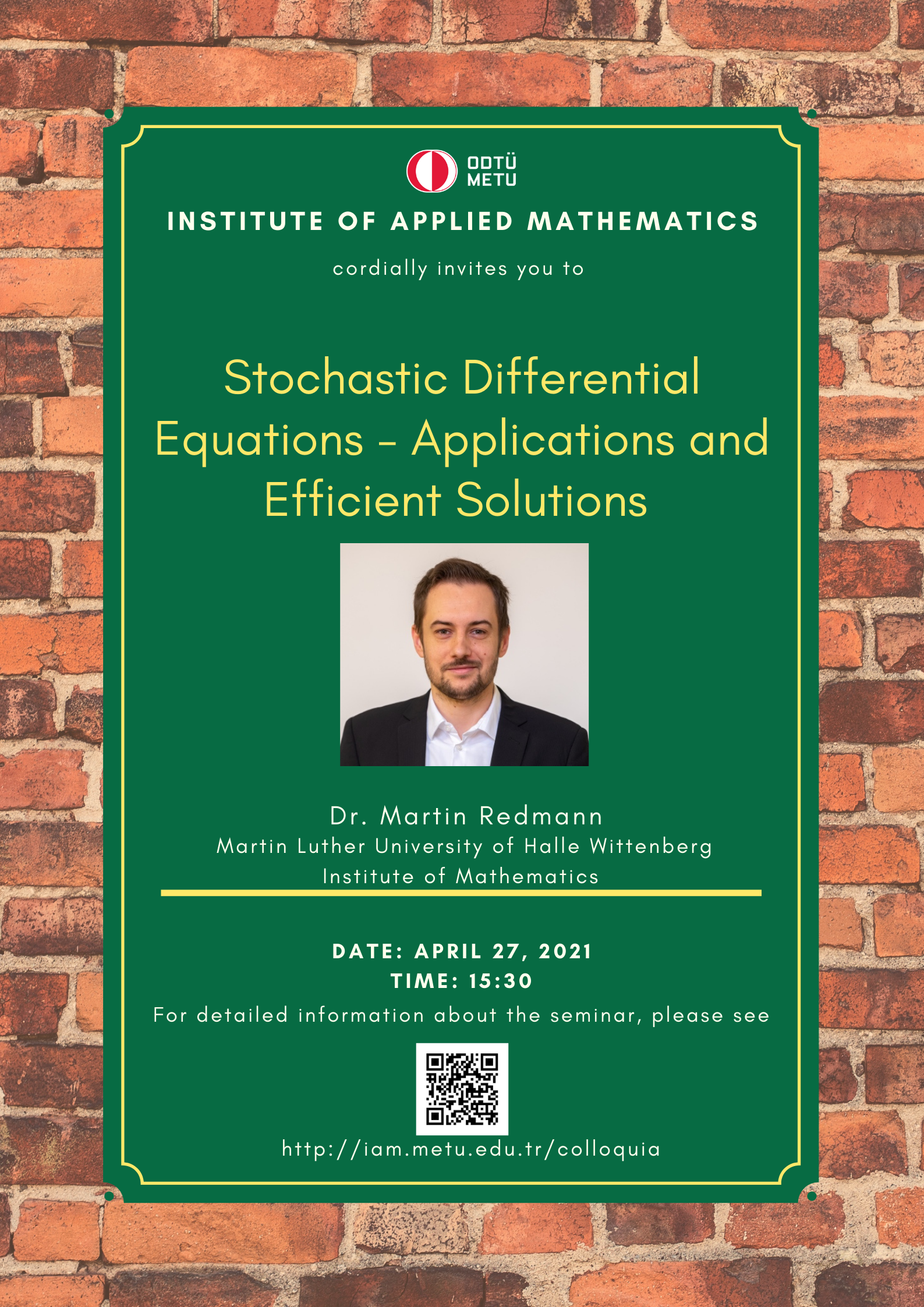
Affiliation: Martin Luther University, Germany Speaker: Prof. Dr. Martin Redmann Invited by: Hamdullah Yücel Date/Time: 27.04.2021 - 15.30 Abstract: In this talk, we give a brief introduction to stochastic differential equations (SDEs) with links to important applications. Subsequently, we discuss scenarios in which large scale SDEs appear. Solving these equations is connected to a high computational effort which, e.g., makes Monte Carlo methods expensive. Model order reduction (MOR) can be used to reduce the dimension of large-scale SDEs leading to a lower computational complexity. We sketch the idea of MOR for stochastic systems and present some recent theoretical and numerical results. |
 |
|
Speaker: Prof. Dr. Daniele Boffi, Applied Math, KAUST Invited by: Önder Türk Date/Time: 20.04.2021 - 15.30 Abstract: We discuss the finite element approximation of eigenvalue problems arising from elliptic partial differential equations. We present various examples of non-standard schemes, including mixed finite elements, approximation of operators related to the least-squares finite element method, parameter dependent formulations such as those produced by the virtual element method. Each example is studied theoretically; advantages and disadvantages of each approach are pointed out. |
 |
|
Affiliation: Technical University Kaiserslautern, Germany Speaker: Prof. Dr. Ralf Korn Invited by: A. Sevtap Kestel Date/Time: 26.01.2021 - 15.30 Abstract: We consider an investment and consumption problem in the face of a once-in-a-life-time event that causes the stock market to crash. However, there is no probabilistic information on the occurrence and the height of the crash. We are faced with Knightean uncertainty. Thus, traditional portfolio optimization approaches are not applicable. The talk contains an introduction into standard portfolio optimization methods and into the worst-case approach. A so-called life time consumption problem will be solved and leads to an explicit solution that depends on the character of the investor and that allows for economic interpretations. |
 |
|
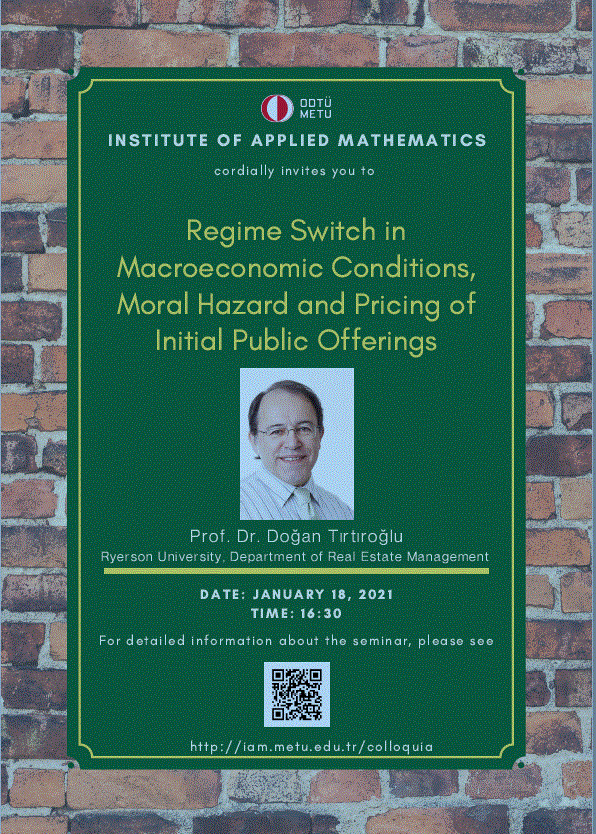
Affiliation: Ryerson University Speaker: Doğan Tırtıroğlu Invited by: A. Sevtap Kestel Date/Time: 18.01.2021 - 16.30 Abstract: We posit a new hypothesis on the pricing of IPOs and provide evidence on it from IPOs issued in Turkey between 1989 and September 2020. The hypothesis focuses on how a sudden and unexpected regime switch in macroeconomic conditions affects the pricing of IPOs. Remarkably and unexpectedly, high uncertainty "bleaches" even the well-established hot market effects on IPO initial-day returns. These are brand-new results in the literature and push macroeconomic uncertainty as a risk factor for IPOs to the forefront. Overall, Turkish issuers have left much less money on the table than others in the USA and elsewhere. This is another remarkable piece of finding and an addition to the rich list of puzzles of the IPO literature. |
 |
|
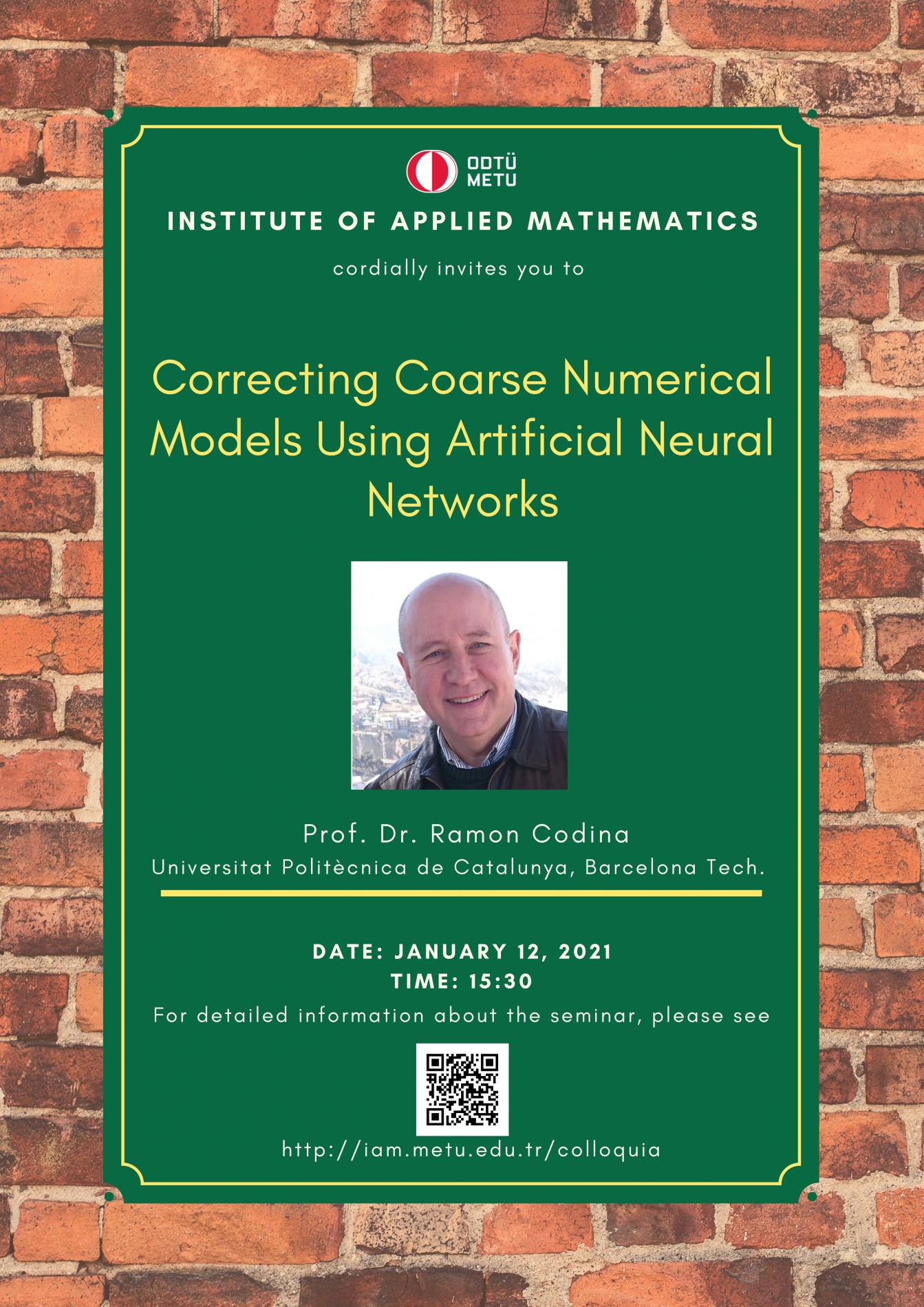
Affiliation: Universitat Politècnica de Catalunya (UPC) Speaker: Ramon Codina Invited by: Önder Türk Date/Time: 12.01.2021 - 15.30 Abstract: When approximating numerically a mathematical model one often faces the need for many solves. This happens for example in optimisation. The idea of the methodology to be presented is to improve coarse solutions from the knowledge of fine solutions. This corrective term is designed using an Artificial Neural Network, having as training set the collection of fine solutions for the configurations in which these are available. We have applied this concept to different problems: a) In Reduced Order Modelling (ROM), b) In the coarsening of finite element meshes in space, c) In increasing the time step size in transient problems, in particular in wave propagation. Nevertheless, many other applications can be devised for the general concept proposed. |
 |